There’s something oddly satisfying about turning a humble vegetable into a tangy, crunchy, flavour-packed delight. Pickling isn’t just for grandmas and hipster cafés anymore—it’s a simple, cost-effective way to reduce waste, elevate meals, and keep your fridge stocked with instant flavour boosters.
Plus, let’s be honest… anything that makes a carrot taste exciting deserves a moment of appreciation.
Why Pickle Your Vegetables?
Pickling does three very important things:
- Extends shelf life (goodbye, sad wilted veggies)
- Enhances flavour (hello zingy goodness)
- Adds versatility to everyday meals (salads, sandwiches, burgers, grazing boards)
It’s also incredibly forgiving. You don’t need fancy equipment, just a jar, some vinegar, and a little curiosity.
The Best Vegetables for Pickling
This recipe is wonderfully flexible. You can mix and match depending on what’s in your fridge.
Great options include:
- Cucumbers (classic and crunchy)
- Carrots (sweet and firm)
- Red onions (vibrant and tangy)
- Capsicum/bell peppers
- Cauliflower florets
- Green beans
- Radishes (peppery with a punch)
- Zucchini
- Cabbage
Hot tip: Firmer vegetables tend to hold their crunch better over time.
A Simple All-Purpose Pickling Recipe
This is your go-to base recipe—easy to remember and easy to customise.
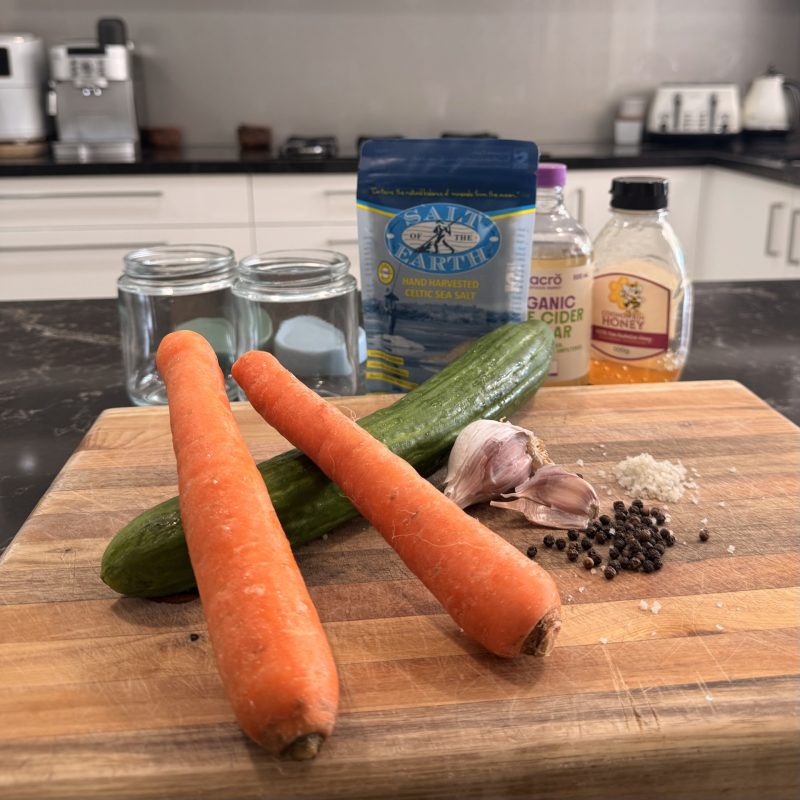
Ingredients:
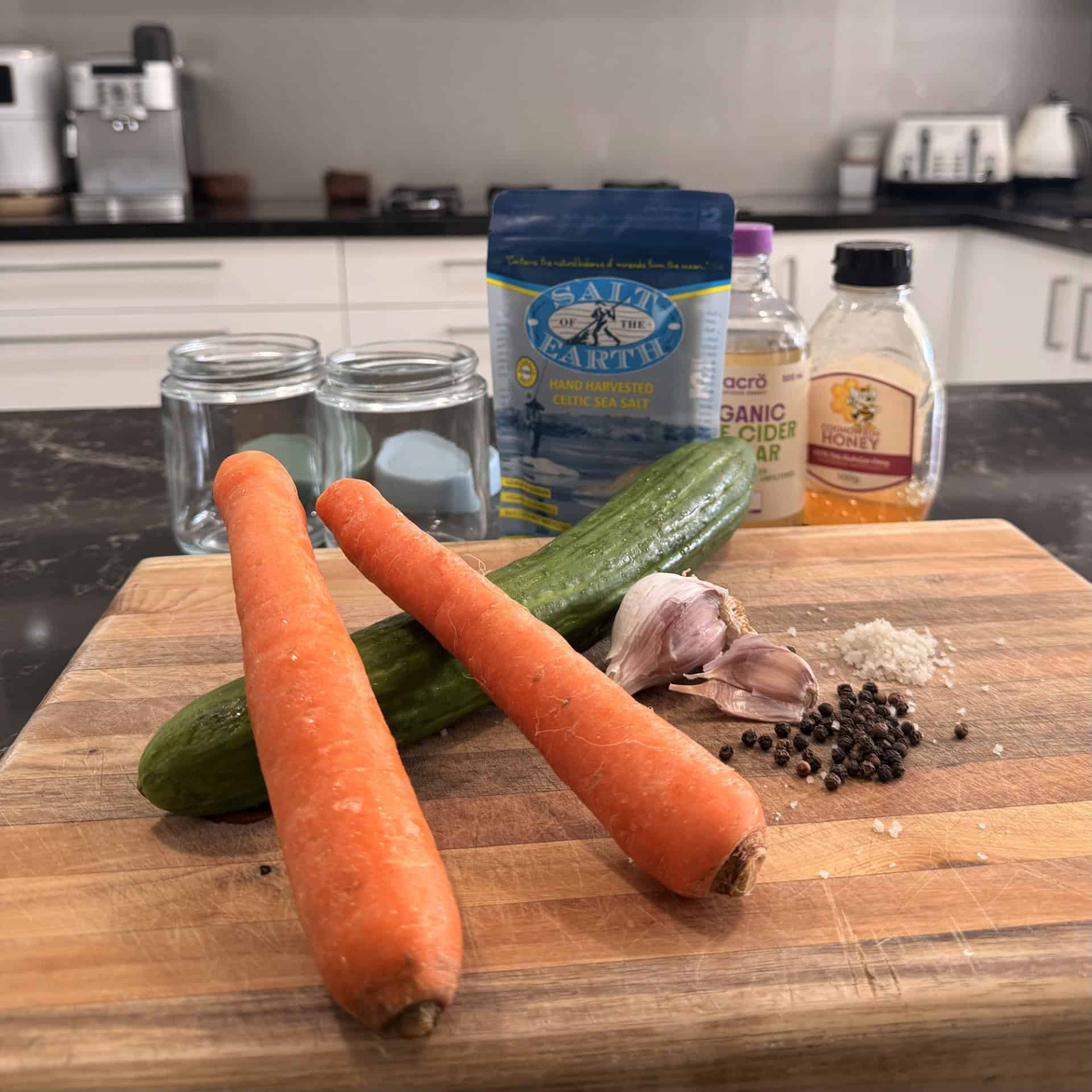
- 2 cups mixed vegetables (sliced or chopped)
- 1 cup white vinegar (or apple cider vinegar for a softer tang)
- 1 cup water
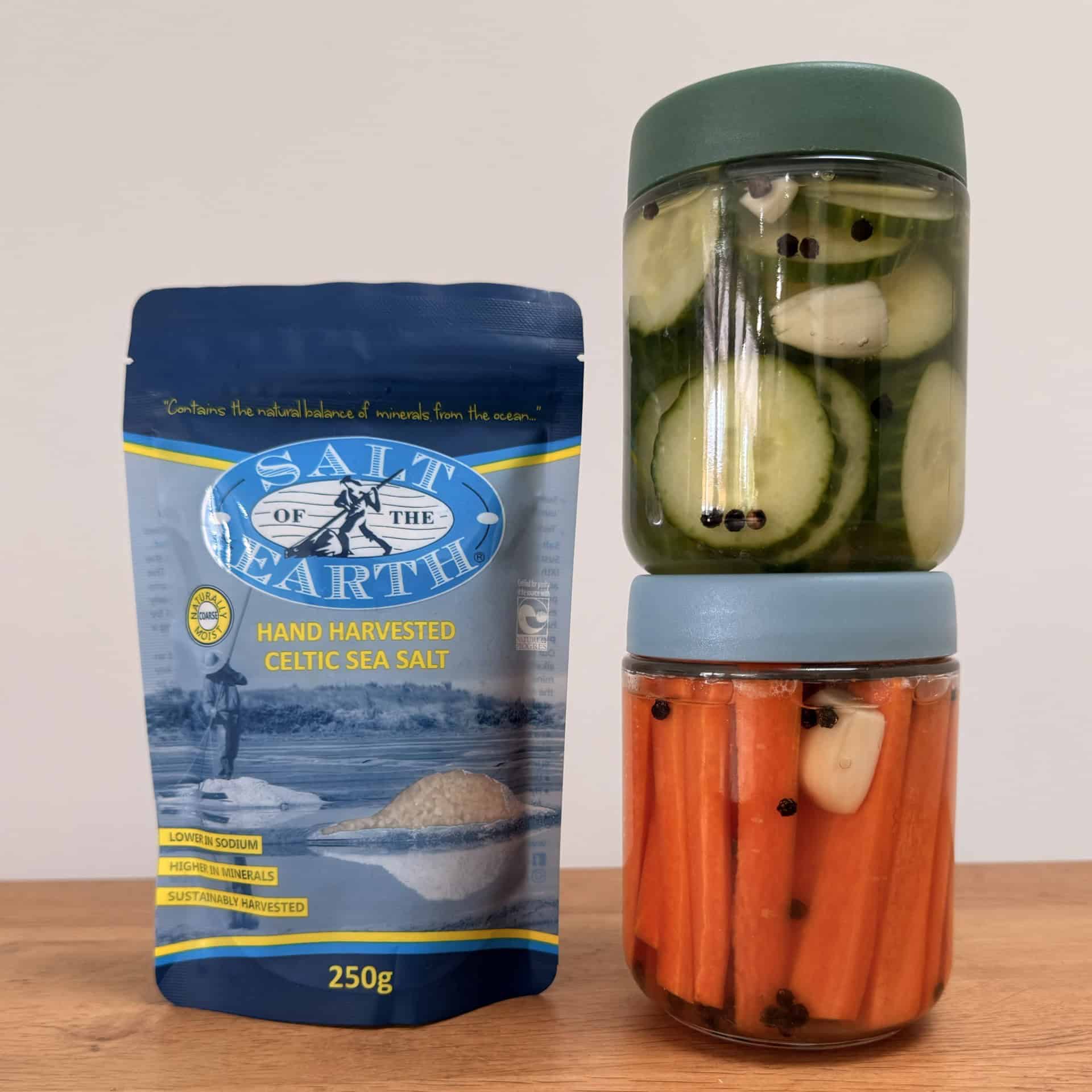
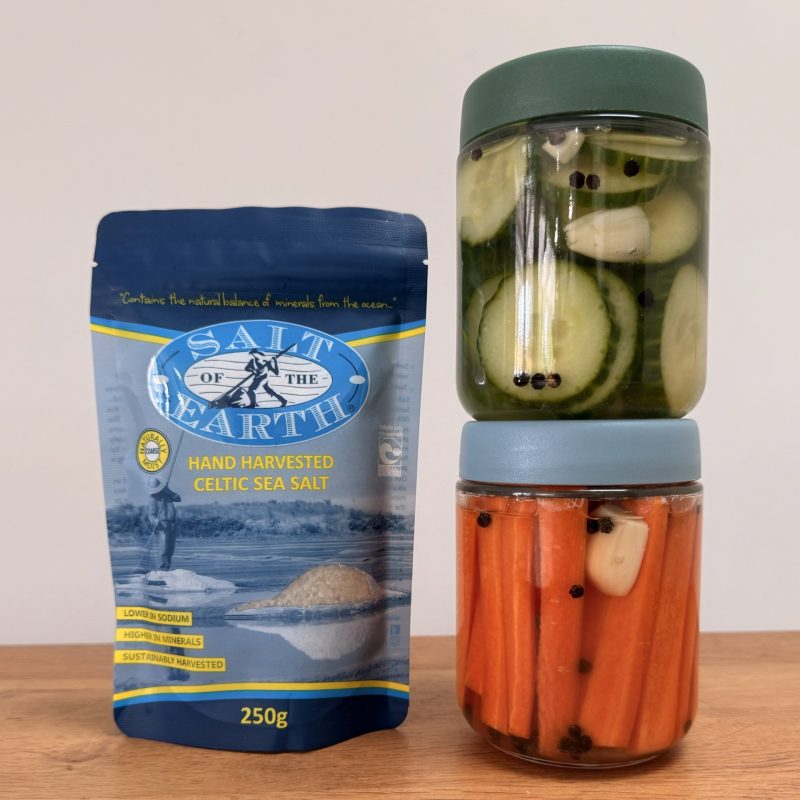
- 1 tablespoon Celtic Sea Salt
- 2 tablespoons sugar (after a healthier alternative, swap out 1:1 with Honey for a clean floral taste or maple syrup for caramel undertones.)
- 2–3 whole cloves garlic pealed & slightly crushed (optional, but highly recommended)
- 1 teaspoon whole peppercorns
- Optional extras: mustard seeds, dill, chilli flakes, bay leaves
Method:
- Prep your veggies
Wash and slice into uniform sizes so they pickle evenly.
- Make the brine
In a saucepan, combine vinegar, water, Celtic Sea Salt, and sugar.
Heat gently until everything dissolves (no need to boil).
- Pack your jar
Place vegetables into a clean glass jar. Add garlic and spices.
- Pour and seal
Pour the warm brine over the vegetables until fully submerged.
- Cool it down
Let the jar cool at room temperature, then seal and refrigerate.
- Wait (the hardest part!)
- Quick pickles: ready in 24 hours
- Best flavour: 2–5 days
How Long Do Pickled Vegetables Last?
When stored in the fridge:
- Best quality: up to 2–3 weeks
- Still safe: up to 1 month (if kept submerged and refrigerated)
Always use clean utensils when removing veggies to keep them fresh longer.
Fun Ways to Use Your Pickles
Because once you start… you’ll want to put them on everything.
- Toss into salads for a flavour hit
- Add to burgers and sandwiches
- Serve on grazing boards
- Chop into relishes
- Snack straight from the jar (no judgement here)
A Few Final Tips (From One Pickle Enthusiast to Another)
- If it smells funky (and not in a good way), trust your instincts—discard it.
- Play with flavours! Sweet, spicy, garlicky—there’s no wrong answer.
- Don’t throw out the brine—reuse it once for another batch if it’s still clean.
Pickling is one of those small kitchen wins that feels surprisingly rewarding. It’s quick, it’s creative, and it turns everyday veggies into something a little bit special.
And honestly… once you’ve tasted your own homemade pickles, store-bought ones might start feeling a bit… underwhelming 😉
References
- USDA Complete Guide to Home Canning (for safe pickling practices)
- Food Standards Australia New Zealand (FSANZ) – Food safety and storage guidelines
- National Center for Home Food Preservation